Originally published in Kinfolk Islands in September 2022, pgs. 74-85.
The Strait of Hormuz gets a bad rap. Sandwiched between Iran, Oman and the United Arab Emirates in the Persian Gulf, this narrow channel sees a third of global oil trade pass through its waters every day, making it a site of recurring geopolitical tension.
But headlines only tell one side of the story. This busy meander of sea is also home to a happier accident of geography: a string of islands boasting turquoise-blue waters, jaw-dropping landscapes and a diversity of rich cultures. The jewel among them is Hormuz—a sixteen-square-mile island that can be reached by a thirty-minute ferry ride from Bandar Abbas, a port city on the southern coast of mainland Iran.
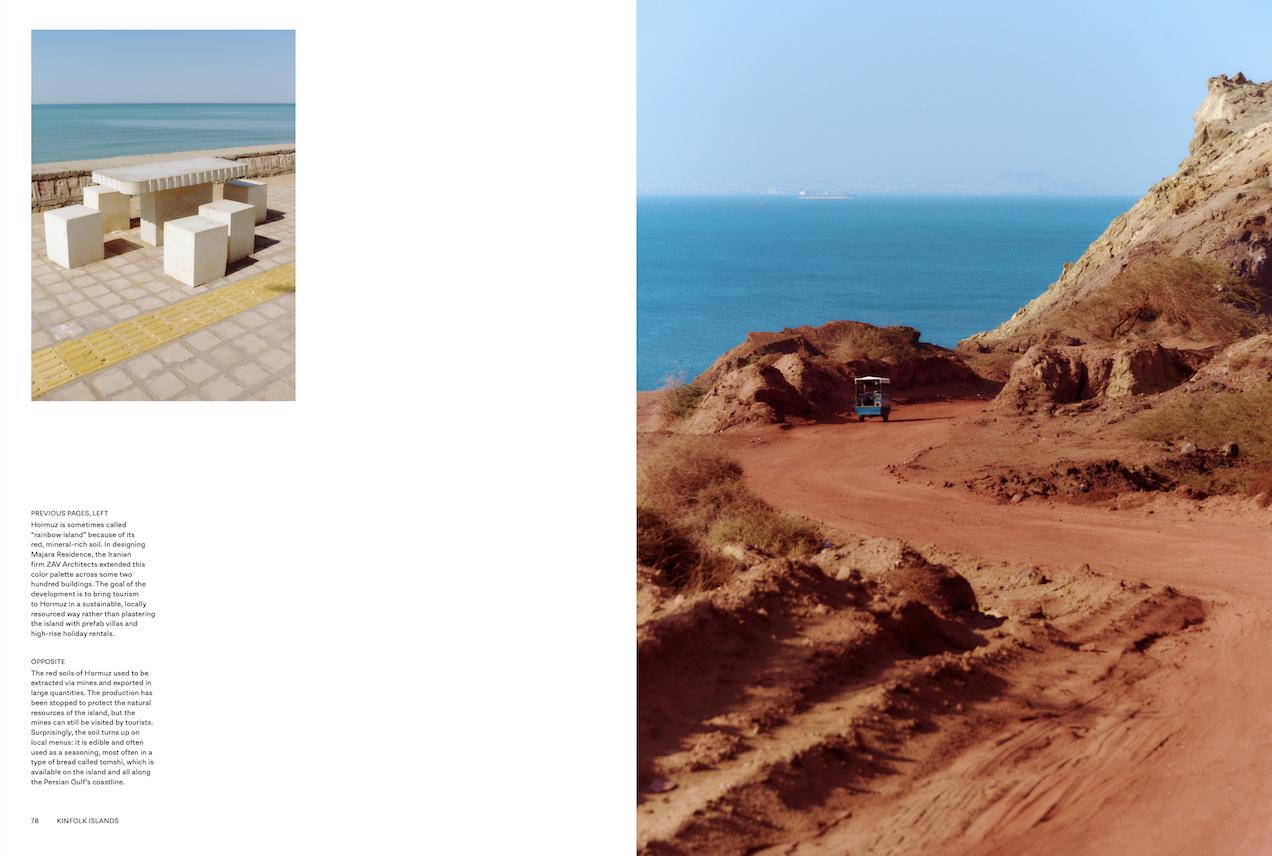
Don’t let the diminutive size of Hormuz fool you: This speck of land, shaped like a tiny teardrop, is home to an explosion of geological oddities. Wandering beyond the edges of the island’s only town, a kaleidoscope of color erupts in every direction. Glowing like embers under the intense sun, the island’s beaches, cliffs and mountains are streaked with dramatic shades of ruby-red, crimson and ochre thanks to more than seventy minerals found in the landscape’s volcanic, iron-rich earth.
Hormuz has just one circular road by which to see its natural wonders: You can rent a bike in the main town and explore on your own during the cooler winter months or find a rickshaw driver when the weather is warmer (Hormuz is best visited between November and March, when daily highs remain below 86° Fahrenheit. In summer, the island is unbearably hot, humid and best avoided). Traveling anti-clockwise around the island, you’ll pass through the Valley of Silence, where pinks, reds and creamy whites ribbon across salt-crusted rocks, before coming upon the Goddess of Salt—a shimmering salt mountain rising out of the earth in a complex of columns and caves. Take off your shoes and touch the salt crust with bare feet; residents believe the mountain releases positive energy.
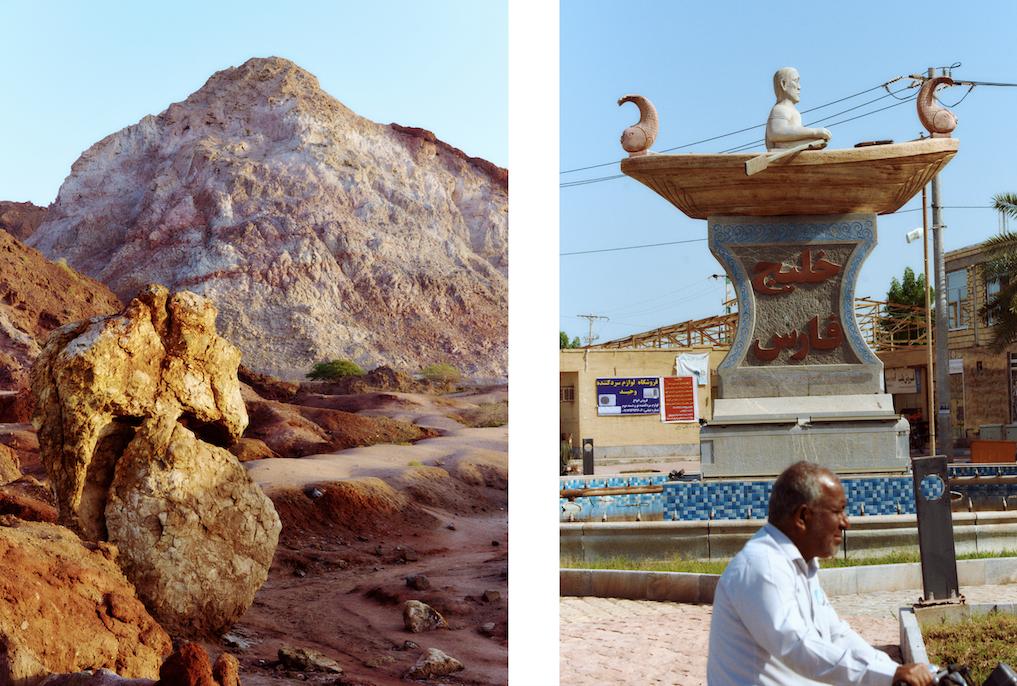
Hormuz’s psychedelic scenery and low-key lifestyle attract hippies from across Iran, who spend days (or weeks) camped out at its beaches—one of the island’s central attractions—while exploring its interior. Hormuz counts numerous valleys, each with starkly different geological features. A short distance southwest of the Goddess of Salt is Rainbow Valley, where the pigments in the soil are the most vibrant on the island—shocking streaks of red, purple, yellow, ochre and blue surge through the terrain. At the island’s south, the Valley of the Statues is an otherworldly outcrop of natural rock formations, weathered over thousands of years into arches, towers and pareidolic dragons and birds.
The best beaches can be found on the southern coast, where the red mountains and the soil’s rainbow hues spill out into azure water. At the island’s southernmost tip, the tranquil waves at Silver Beach—named for its shimmering sands—are ideal for long swims.
Nature, while a prime attraction, certainly isn’t the only thing to explore in Hormuz. While just across the Strait, Dubai defines itself with towering skyscrapers and glossy living, Iran’s islands whisper another story of the Persian Gulf: one of ancient port towns and a hybrid culture that has drawn as much influence from East Africa and South Asia as it has Iran and the Arab world.
These traces can be seen at Hormuz’s small port town. This humble collection of buildings was once at the heart of a vast maritime economy spanning Asia, Africa, and Europe. In the 1400s, Hormuz was a cosmopolitan entrepôt home to nearly 40,000 people and imported vast quantities of wood, spices and fresh water to make life on the arid island livable and luxurious. The town was so famous that Portuguese colonizers conquered it in the 16th century and made it their regional base, building a red stone fortress that still dominates the town. Today, Hormuz is a sleepy but picturesque fishing village for a few thousand residents, and a perfect base for exploring the island.
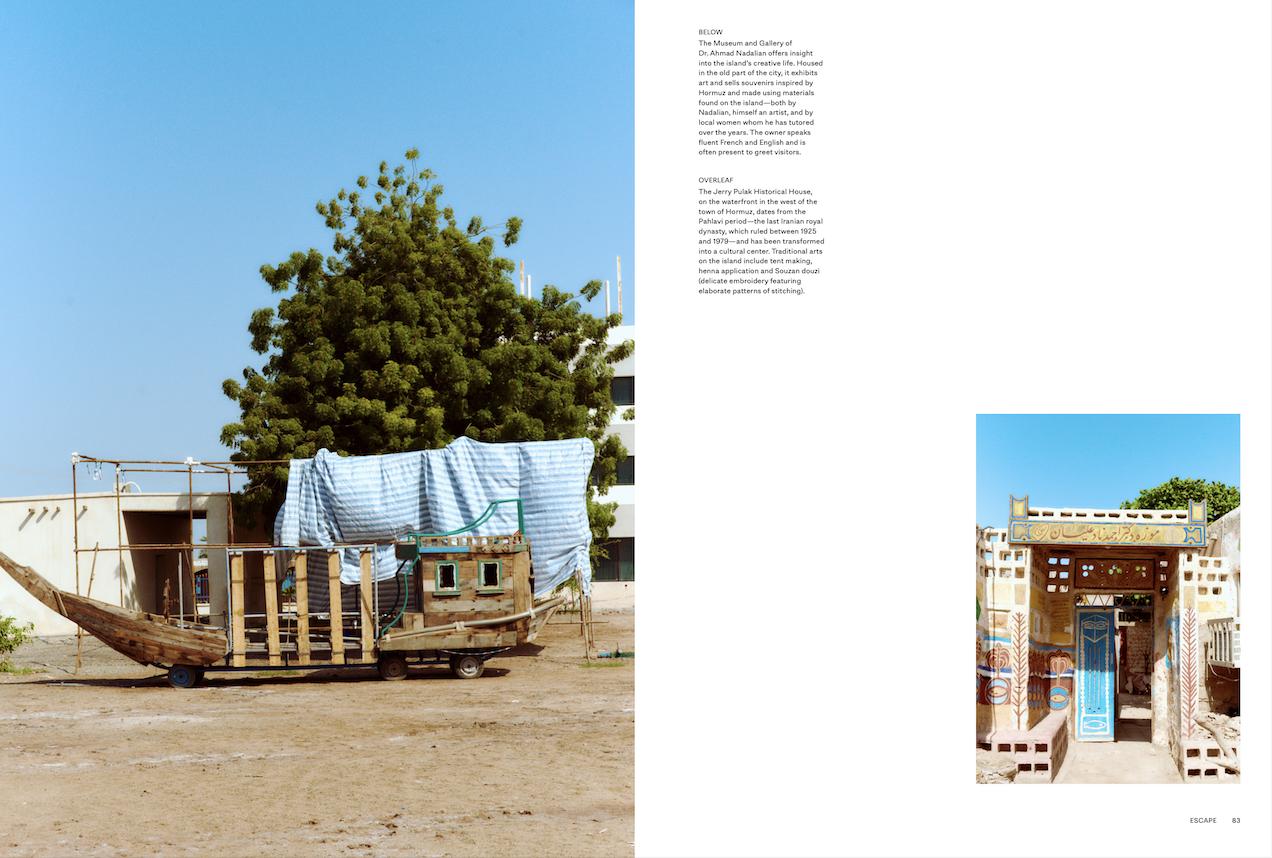
Hormuz lacks the amenities of a major tourist destination; a family homestay is your best bet to experience island culture firsthand while also contributing to the local economy. There are a handful of cool places to hang out in, like Cafe Gelak and the Ahmad Nadalian Museum, and there are also several restaurants in which to try local specialties, like ghelieh mahi—a spicy tamarind, turmeric and fenugreek fish stew—or poodini kooseh, shark cooked with dill, coriander and onion. Some dishes use the powdery red soil found across the island as a spice, like tomoshi—a tasty bread perfect with breakfast—or the curry-like stews that are a staple of Hormuz’s cuisine, to which it lends an earthy flavor.
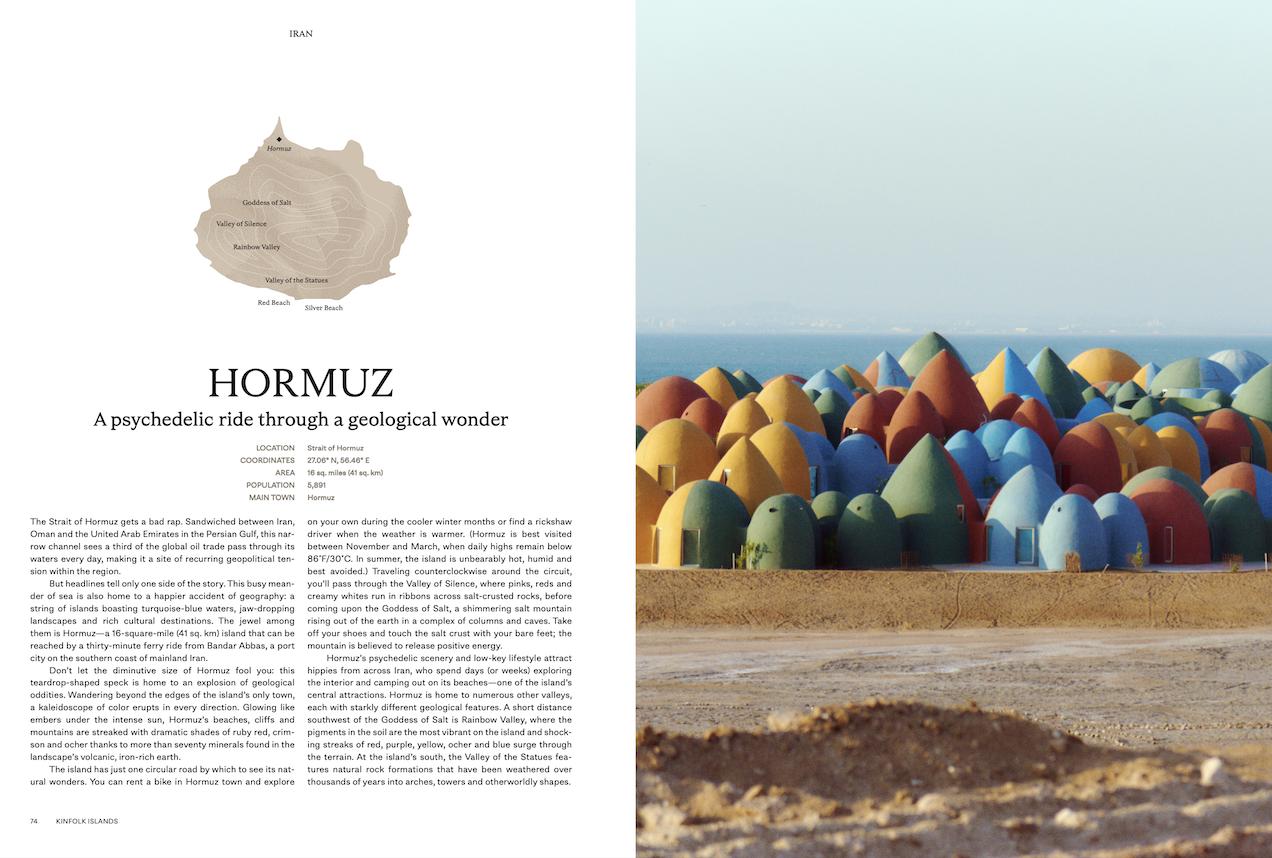
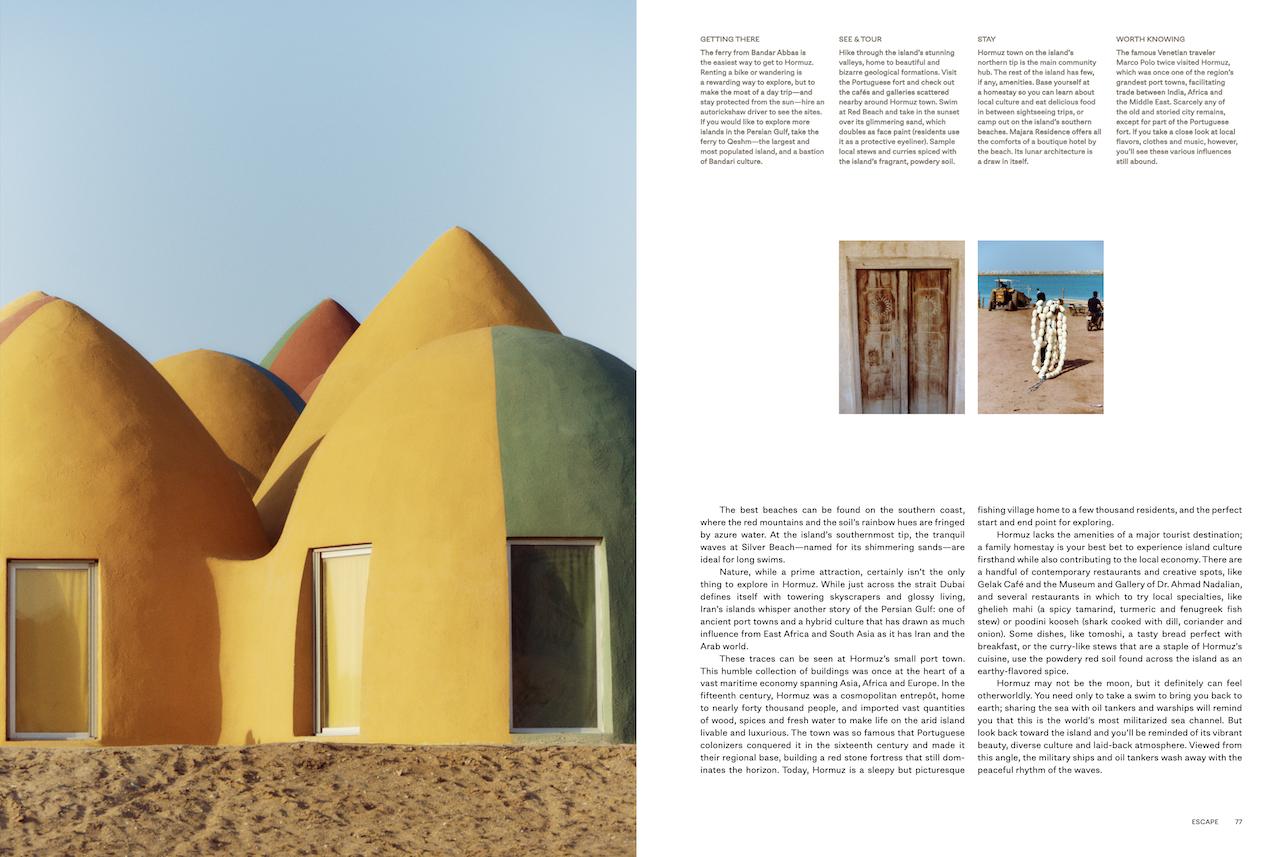
If you’re looking for more privacy and creature comforts, the newly-opened Majara Residence on the western shore is the best option. Inspired by the island’s bright hues and organic forms, this rainbow-colored complex is the initiative of Tehran-based ZAV Architects; clusters of domed structures—vacation homes, restaurants, cafés and shops—are part of an ongoing project to include the island’s community in local tourism and investment. Central to the scheme is superadobe, an innovative building technique that uses local resources to create sustainable beehive-style buildings that can resist extreme heat and earthquakes. Pioneered by the late Iranian architect Nader Khalili in the 1980s, superadobe was developed in response to a call from NASA for proposals for settlements that could be built on the moon.
Hormuz may not be the moon, but it definitely can feel otherworldy. You need only to take a swim to bring you back to earth; passing oil tankers and warships will remind you that you’re swimming in the world’s most militarized sea channel. But amid the island’s psychedelic beauty, diverse culture, and chill vibes, the distant beating of war drums is drowned out by the peaceful rhythm of the waves.